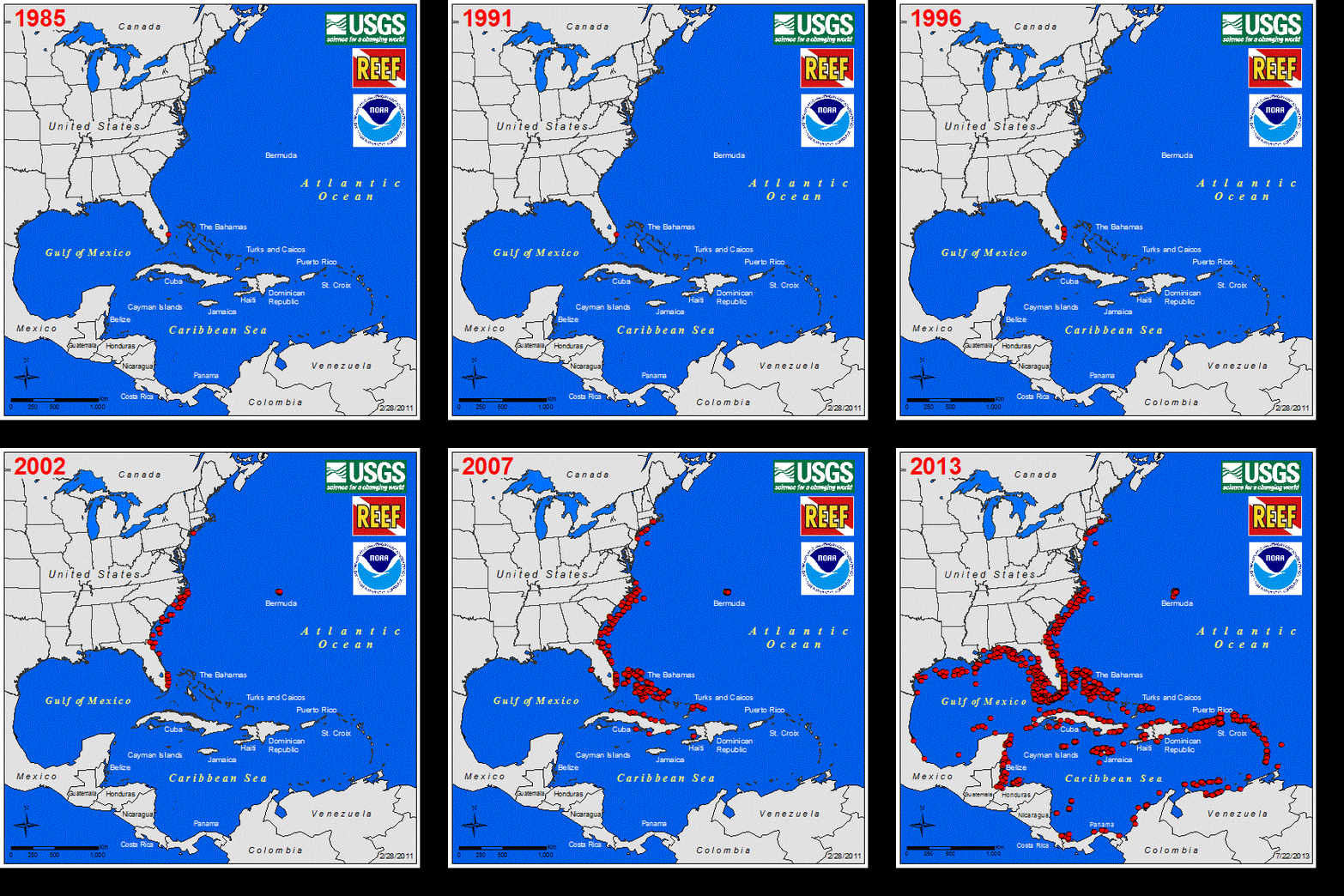
I have recently learned about a new crisis that is brewing in deep coral reefs in the Caribbean. Is it a shark? No. Coral bleaching? No. Dynamite fishing? No. It’s a lionfish. For those of you who know what a lionfish is, you may be thinking how could a fish that is usually found in an aquarium create a “crisis.” Well, lionfish are actually native to tropical reef waters of the South Pacific and Indian Oceans. Yet, in 1992, an aquarium that broke during Hurricane Andrew is believed to have released a few lionfish into the Atlantic Ocean. Since then, reports have begun to come in regularly from divers in Florida. Lionfish have branched out and are now found along the U.S. East Coast from Florida north to Massachusetts. Luckily for the northern states, the species’ intolerance of cold winter temperatures means it is unlikely to survive in these areas. However, in the warm waters south of Florida, it’s quite another story.
 The distribution of lionfish has spread from Florida south into the Caribbean. Since the early 2000’s, lionfish have been documented in Bermuda and the Bahamas. Since the second half of 2007, they have spread rapidly throughout the Caribbean. Sightings have occurred in the Turks and Caicos, Dominican Republic, Cayman Islands, Jamaica, St. Croix (USVI), Haiti, Puerto Rico, Colombia, Mexico, Costa Rica, Panama, Honduras, Dry Tortugas, Aruba, and Netherlands Antilles. They are now heading further southward into Mexican, Central, and South American waters.
So why does this matter? Lionfish are voracious predators that quickly adapt to eating new types of food, and they have no native predators in Atlantic or Caribbean waters. They are believed to be as abundant now as some native grouper species in the Atlantic Ocean. Lionfish have venomous dorsal, ventral, and anal spines that can deter predators and injure humans. They can reproduce year-round and are relatively resistant to parasites, giving them an advantage over native species. They are also fast growing and can outgrow and out-compete native species for food and space.
Lionfish are eating fish and invertebrates in large quantities. Even juvenile spiny lobsters have been found in their stomachs! They can have a huge impact on coral reef communities, particularly given no natural predators exist where they are an invasive species. Research in the Bahamas has suggested that lionfish likely have already had substantial impacts on Atlantic coral reefs where they have become established. They can eat parrotfish and other herbivorous reef fishes at alarming rates; yet, reefs depend on these species to prevent seaweed and macroalgae from overgrowing the corals.
Since lionfish are spreading so fast, eradication is unlikely. The only thing we can do now is to try to protect valuable and vulnerable reefs from these voracious predators and to slow their expansion into new areas. Education and involvement of divers and snorkelers are the best bet to slowing the expansion of lionfish. It will also be important to maintain or rebuild healthy populations of potential native predator species, such as sharks and grouper, which may feed on lionfish. It is important we act now before it’s too late to protect these reefs which are so important to the ecology and tourism economy of many Caribbean nations.